
- Service category
- Water Mitigation & Drainage
- Work type
- Sump Pump & Trench Clearing
- Service area
- Rock Hill, SC & surrounding areas
The Situation
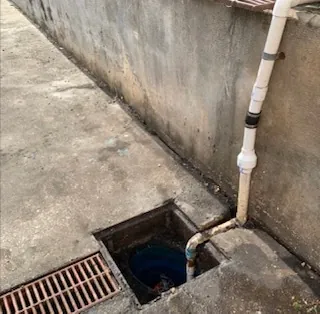
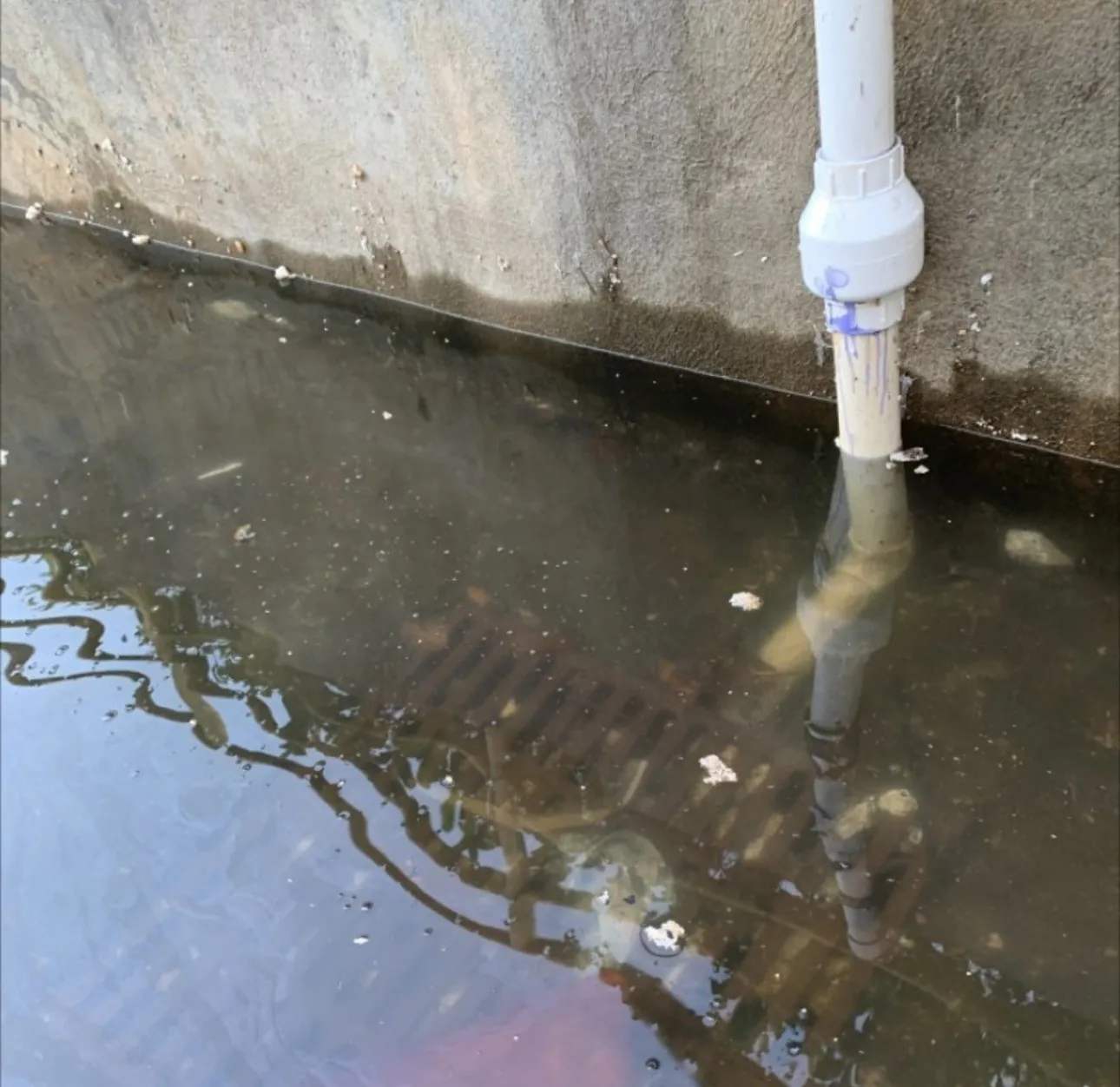
The commercial trench and drainage basin were submerged and overflowing with muddy floodwater. The drainage area needed emergency water pump-out and debris extraction. The work also addressed PVC sump pump discharge lines rather than stopping at removal of the visible standing water.
A drainage trench and catch basin serve a different role from an ordinary outdoor surface. The flooded condition involved both accumulated water and debris in the drainage area. The project description ties restoration of the sump discharge lines to preventing building foundation water intrusion.
What We Did
- Pumped water out of the overflowing commercial drainage trench and catch basin.
- Extracted debris and cleared the basin.
- Restored operational PVC sump pump discharge lines and repaired the discharge plumbing.
The Result
The drainage trench was pumped dry, the basin was cleared, and the sump discharge plumbing was repaired. The finished condition contrasts with the muddy, overflowing basin present before the extraction and restoration work.
This project combined water removal with attention to the discharge lines. The described result is a pumped and cleared drainage area with restored sump discharge plumbing.
Why It Matters for Property Managers
For property managers, water at a catch basin is a reason to describe the drainage condition carefully. A pump-out request and a discharge-line repair may be connected, but they are not interchangeable. Identifying the trench, basin, and visible plumbing concern helps a manager communicate what needs assessment without assuming every drainage problem has the same cause.
Debris can be part of a drainage obstruction, and standing water can conceal conditions that cannot be evaluated from a photograph alone. Managers should keep observations separate from conclusions. Note where water is collecting and what can be seen safely, then discuss the appropriate extraction or repair scope with qualified help.
A completed work record should distinguish water removed, debris cleared, and plumbing restored. Those descriptions make it easier to understand the actual intervention instead of reducing the entire request to a vague label such as flood cleanup. They also help keep separate any later concerns that require further assessment.
Routine property observations and emergency drainage work play different roles. Managers can record visible accumulation around drainage areas during ordinary upkeep, while avoiding entry into flooded trenches or basins. When requesting similar work, describe the affected location and apparent overflow without putting staff at risk to gather additional detail.